

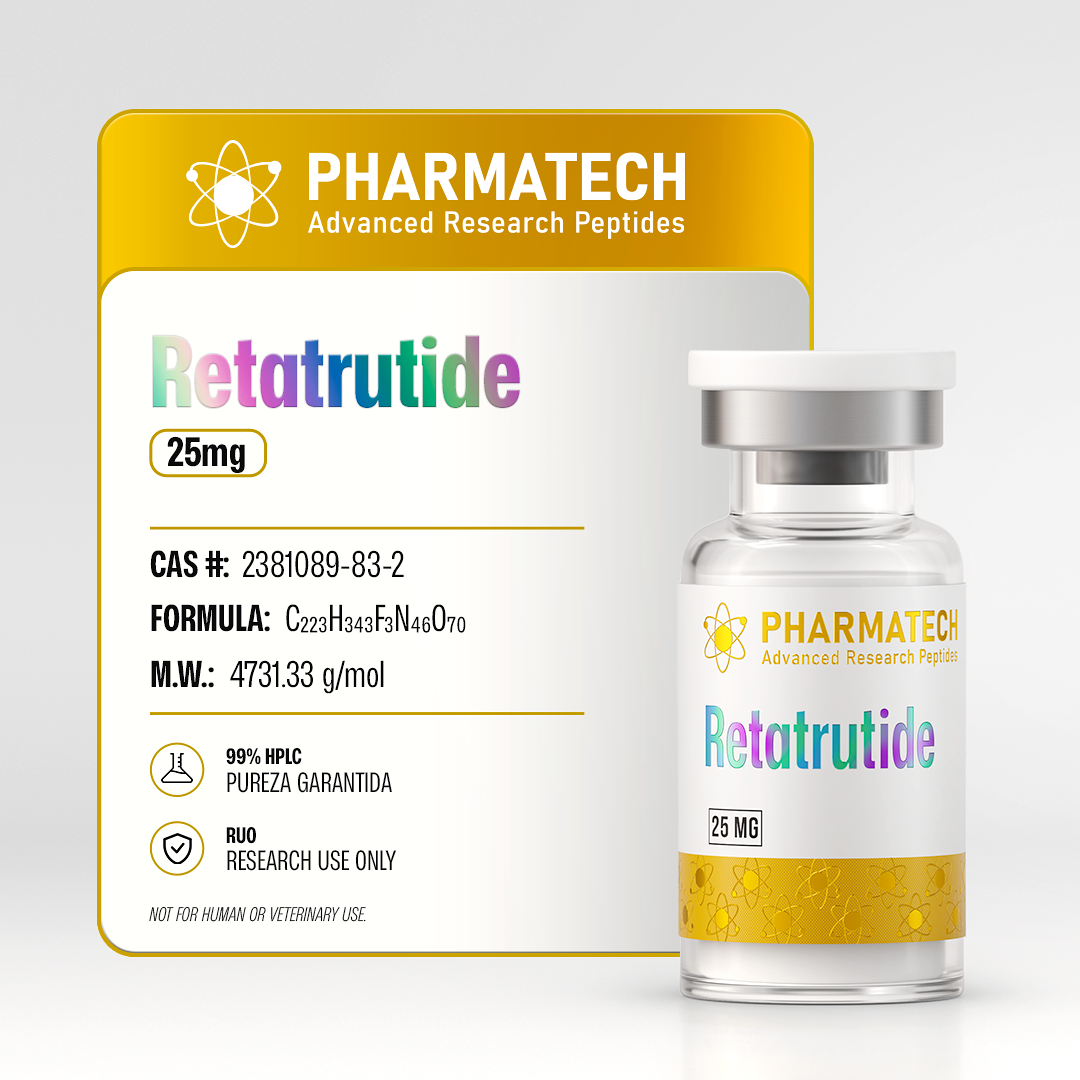
Retatrutide 25mg – PharmaTech
Retatrutide, also known as LY3437943, is a long-acting synthetic peptide designed to activate three complementary metabolic hormone receptors: the glucose-dependent insulinotropic polypeptide receptor (GIPR), glucagon-like peptide-1 receptor (GLP-1R), and glucagon receptor (GCGR).
This triple-receptor activity distinguishes retatrutide from selective GLP-1 receptor agonists and dual GIP/GLP-1 receptor agonists, making it a prominent subject of research in metabolic regulation, glucose homeostasis, energy balance, appetite control, and body-weight regulation.
Retatrutide is a 39-amino-acid peptide incorporating structural modifications and a C20 fatty-acid moiety that contribute to its prolonged pharmacological profile.
OVERVIEW
Retatrutide, also known as LY3437943, is a long-acting synthetic peptide designed to activate three complementary metabolic hormone receptors: the glucose-dependent insulinotropic polypeptide receptor (GIPR), glucagon-like peptide-1 receptor (GLP-1R), and glucagon receptor (GCGR).
This triple-receptor activity distinguishes retatrutide from selective GLP-1 receptor agonists and dual GIP/GLP-1 receptor agonists, making it a prominent subject of research in metabolic regulation, glucose homeostasis, energy balance, appetite control, and body-weight regulation.
Retatrutide is a 39-amino-acid peptide incorporating structural modifications and a C20 fatty-acid moiety that contribute to its prolonged pharmacological profile.
MECHANISM OF ACTION
Retatrutide is a triple GIP, GLP-1, and glucagon receptor agonist.
Activation of GIPR and GLP-1R contributes to glucose-dependent insulin secretion and regulation of metabolic signaling, while glucagon receptor activation influences energy expenditure, substrate metabolism, and hepatic metabolic pathways.
The combined activity of these three receptor systems is being investigated as a coordinated approach to metabolic regulation, integrating mechanisms associated with:
- Glucose-dependent insulin secretion
- Glucagon regulation
- Appetite and caloric intake
- Energy expenditure
- Lipid and substrate metabolism
- Body-weight regulation
The molecular design incorporates a lipid modification that promotes albumin association and contributes to the compound’s extended duration of action.
KEY BENEFITS
Research involving retatrutide has focused on several interconnected areas of metabolic physiology:
- Triple GIP/GLP-1/Glucagon receptor activation
- Body-weight reduction
- Appetite and caloric-intake regulation
- Glucose and metabolic homeostasis
- Energy metabolism
- Body-composition research
- Cardiometabolic research
- Metabolic effects associated with obesity
In clinical studies, retatrutide has demonstrated substantial reductions in body weight, with the magnitude increasing across the studied dose ranges.
RESEARCH AREAS
Metabolic Research
Investigation of glucose homeostasis, insulin signaling, energy metabolism, and metabolic adaptation.
Weight Management Research
Research examining body weight, appetite, caloric intake, and changes in body composition.
Incretin Biology
Investigation of the combined effects of GIP and GLP-1 receptor activation.
Glucagon Signaling
Research into the contribution of glucagon receptor activation to energy expenditure and substrate metabolism.
Energy Balance
Investigation of the interaction between appetite regulation, energy expenditure, and metabolic substrate utilization.
Cardiometabolic Research
Evaluation of metabolic parameters associated with obesity and related physiological conditions.
SCIENTIFIC EVIDENCE
Retatrutide has progressed from early clinical investigation to Phase 3 clinical research.
In a randomized Phase 2 trial published in the New England Journal of Medicine in 2023, retatrutide produced dose-dependent reductions in body weight over 48 weeks. In the 12 mg group, the reported least-squares mean change in body weight was −24.2%, compared with −2.1% with placebo.
More recently, the TRIUMPH-1 Phase 3 trial, published in September 2026, evaluated once-weekly retatrutide in adults with obesity without diabetes over 80 weeks. Mean body-weight changes were reported as −17.6% with 4 mg, −23.7% with 9 mg, and −25.0% with 12 mg, compared with −3.9% with placebo.
The Phase 3 study also investigated outcomes related to knee osteoarthritis and obstructive sleep apnea, providing additional data regarding the broader metabolic and physiological effects being studied with retatrutide.
MOLECULAR PROFILE
| Parameter | Specification |
|---|---|
| Compound | Retatrutide |
| Alternative Name | LY3437943 |
| Development Code | LY3437943 |
| Molecular Class | Synthetic peptide |
| Peptide Length | 39 amino acids |
| Primary Targets | GIPR / GLP-1R / GCGR |
| Molecular Formula | C₂₂₁H₃₄₂N₄₆O₆₈ |
| Molecular Weight | ~4.731 kDa |
| CAS Number | 2381089-83-2 |
| UNII | NOP2Y096GV |
| Lipid Modification | C20 fatty-acid moiety |
The molecular formula, molecular weight, sequence characteristics, CAS number and identifiers are documented by the USAN Council and chemical databases.
PHARMACOKINETIC & PHARMACODYNAMIC PROFILE
Retatrutide was engineered as a long-acting peptide suitable for once-weekly administration in clinical studies.
Its pharmacological profile reflects the combined activity of three receptor systems:
GIPR
Associated with incretin signaling, insulin secretion, and metabolic regulation.
GLP-1R
Associated with glucose-dependent insulin secretion, appetite regulation, and gastrointestinal effects.
GCGR
Associated with glucagon signaling, hepatic metabolism, and energy expenditure.
The Phase 2 and Phase 3 clinical programs evaluated retatrutide using once-weekly administration, with dose escalation strategies incorporated into the clinical trial designs.
RESEARCH HIGHLIGHTS
Triple-Receptor Activation
Retatrutide simultaneously targets GIP, GLP-1, and glucagon receptors, creating a distinct pharmacological profile within the incretin field.
Metabolic Regulation
The compound is being investigated for its integrated effects on glucose regulation, energy metabolism, appetite, and body weight.
Body-Weight Research
Phase 2 and Phase 3 clinical studies have demonstrated substantial dose-dependent reductions in body weight.
Energy Metabolism
Glucagon receptor activity provides an additional metabolic signaling component beyond the GIP/GLP-1 pathways.
Advanced Clinical Development
Retatrutide has progressed into Phase 3 clinical research, representing an advanced stage of investigation within the triple-receptor agonist class.
TECHNICAL SPECIFICATIONS
| Specification | Details |
|---|---|
| Product | Retatrutide |
| Brand | PharmaTech |
| Category | Peptide |
| Development Code | LY3437943 |
| Molecular Formula | C₂₂₁H₃₄₂N₄₆O₆₈ |
| Molecular Weight | ~4.731 kDa |
| CAS Number | 2381089-83-2 |
| Peptide Length | 39 amino acids |
| Primary Targets | GIPR / GLP-1R / GCGR |
| Physical Form | Lyophilized peptide |
| Purity | [PharmaTech specification] |
| Net Content | [Product specification] |
| Storage | [PharmaTech specification] |
| Batch / Lot | [Batch-specific information] |
STORAGE & HANDLING
Store according to the specific storage conditions established for the PharmaTech product and its formulation.
Protect the material from inappropriate temperature exposure, excessive moisture, and direct light. Product-specific storage and handling specifications should follow the information provided with the product.
SCIENTIFIC REFERENCES
- Jastreboff AM, et al. Triple–Hormone-Receptor Agonist Retatrutide for Obesity — A Phase 2 Trial. New England Journal of Medicine. 2023;389:514–526. DOI
- Jastreboff AM, et al. Retatrutide, a Triple Hormone Receptor Agonist, for Treatment of Obesity. New England Journal of Medicine. Published September 29, 2026. New England Journal of Medicine
- USAN Council. Statement on the Nonproprietary Name Adopted for Retatrutide (LY3437943), including molecular formula, sequence and structural characteristics. Busca AMA
- PubChem. Retatrutide chemical structure and molecular information.